Fulvic Acid vs Mineral Fulvic Acid in Neutral pH: Impacts on Crop Growth and Nutrient Uptake
As global agriculture continues to move toward higher efficiency and sustainable development, biostimulants are playing an increasingly important role in improving crop yield and quality. Among them, fulvic acid is widely used due to its excellent chelating ability, soil conditioning effects, and support for root development.
In practical application and trade, however, users often face a key decision: whether to choose traditional fermentation-derived fulvic acid or more advanced Mineral Fulvic Acid in Neutral PH. Even relatively small differences in raw material origin and pH value can influence product stability, compatibility, and field performance.
Differences in Raw Material Source and Stability
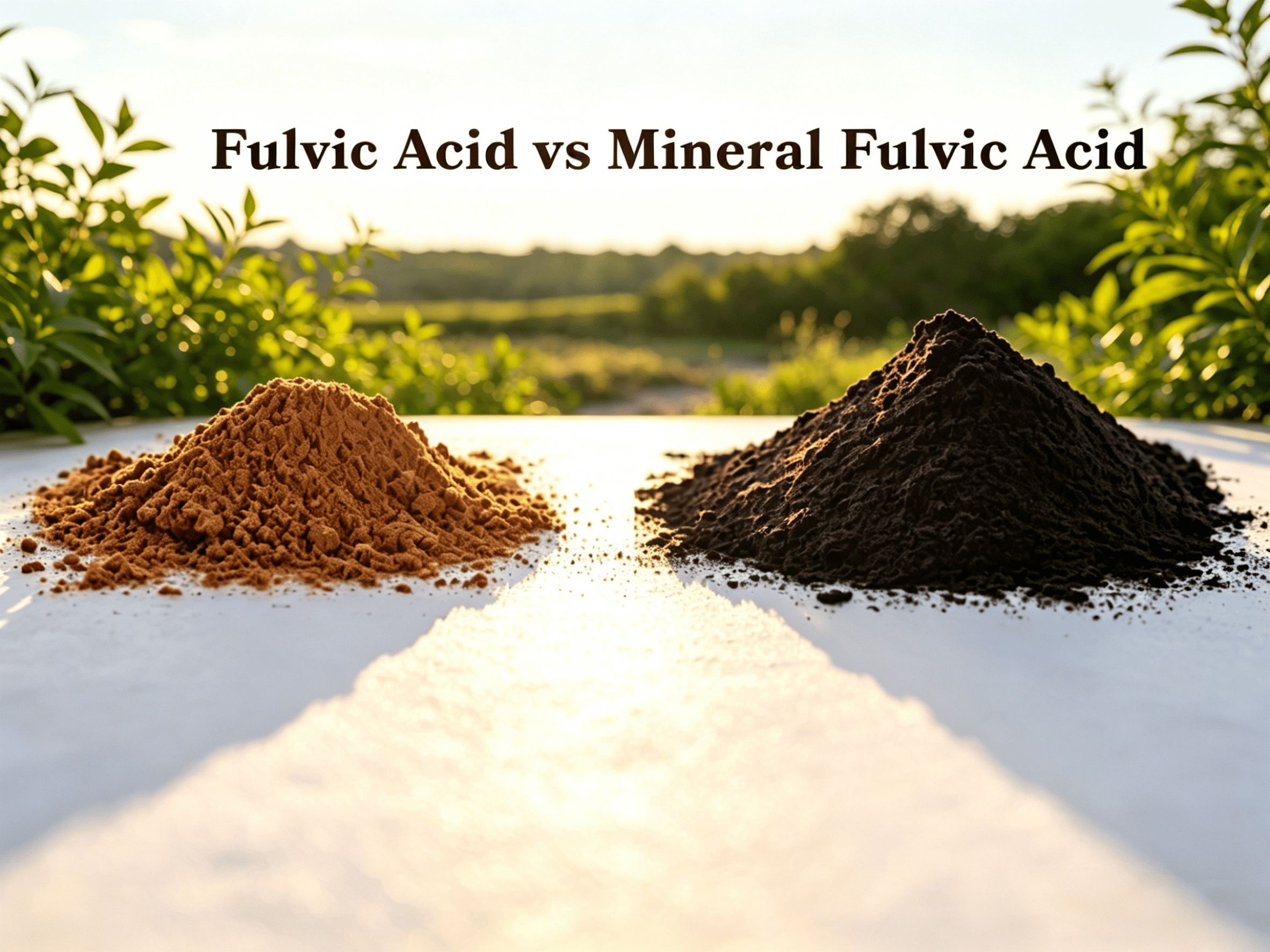
Traditional Fulvic Acid:
- Produced from straw and plant residues through modern fermentation technology.
- Its molecular structure is simple.
- Results can vary under different field conditions.
Mineral Fulvic Acid in Neutral PH:
- Derived from Leonardite, a natural source rich in humic substances formed through long-term geological processes.
- Has a more stable and condensed molecular structure.
- Shows consistent performance across various agricultural conditions.
Key Parameter Comparison: pH Value
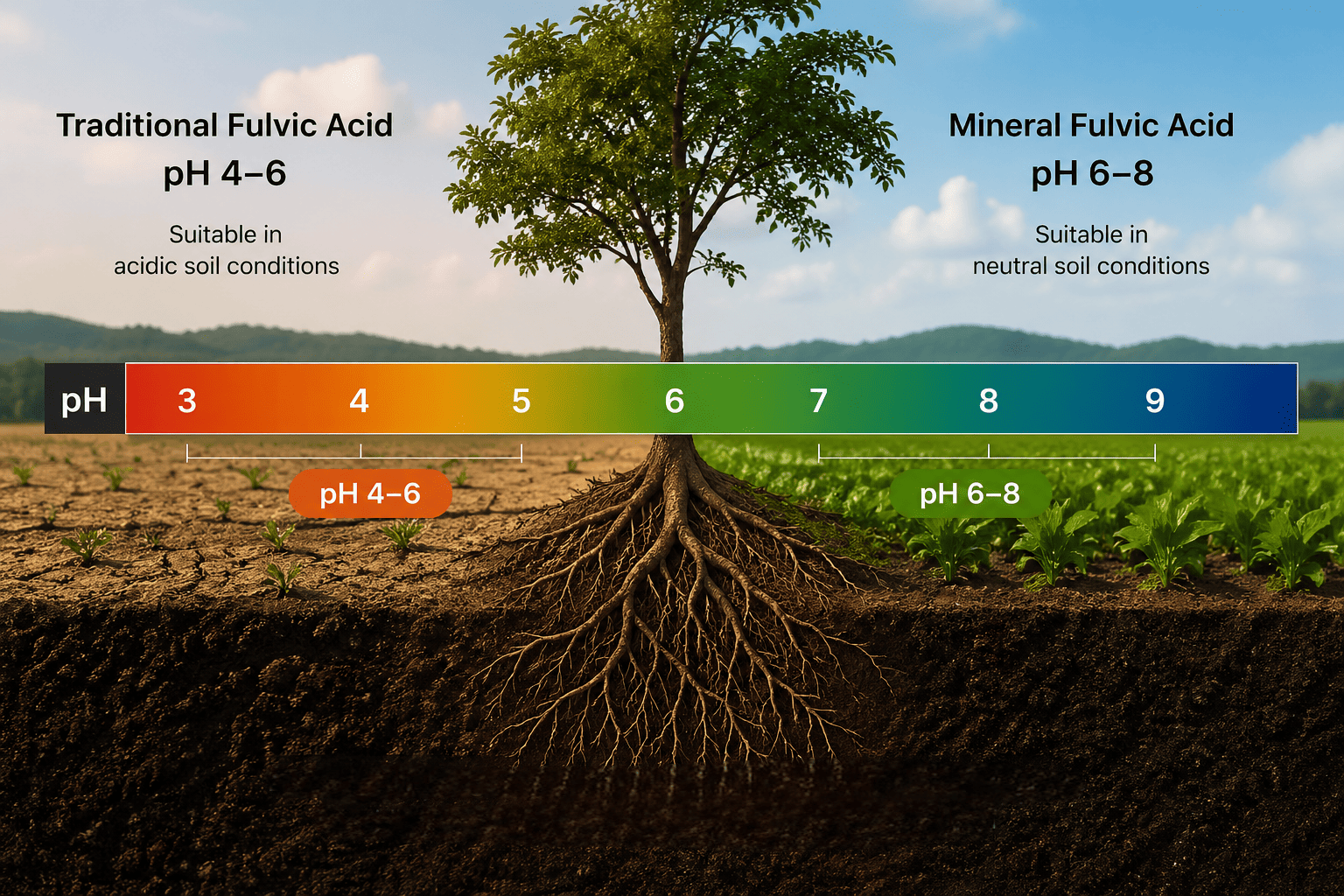
Most conventional products are acidic, typically with a pH range of 4.0–6.0. In this acidic environment, interactions with certain alkaline pesticides or fertilizers may vary, which can influence solution stability in tank-mix applications.
Mineral Fulvic Acid in Neutral PH:
Through advanced extraction and purification technology, the pH is stabilized in the range of 6.0–8.0. This is closer to neutral conditions commonly associated with crop growth environments and soil microbial activity, resulting in a different compatibility profile in agricultural use.
Excellent Tank-Mix Compatibility and Application Performance
For modern agriculture, combining fertilizers and agrochemicals helps improve efficiency and reduce costs. Mineral Fulvic Acid in Neutral PH offers strong compatibility in such applications.
Hard Water Tolerance:
Conventional fulvic acid may form flocculation or sediment in hard water with high calcium and magnesium levels. It maintains good solubility under these conditions.
Versatile Compatibility:
With its neutral pH and stable properties, it can be mixed with most insecticides, fungicides, and micronutrient fertilizers containing calcium, magnesium, zinc, or iron, helping maintain solution stability and improving field application flexibility.

Why Choose GREENFOR Mineral Fulvic Acid in Neutral PH?
Neutral pH: Suitable for All Soil Types:
Works well in different soils and is root-friendly. Easy to mix with fertilizers and agrochemicals, offering safer application.
100% Water Soluble: No Nozzle Blocking:
Dissolves quickly with no residue. Ideal for drip irrigation, sprinkler systems, and drone spraying, saving time and labor.
Foliar Application: Efficient and Safe:
Its mild neutral nature supports fast leaf absorption. Gentle on leaves and flowers, helping crops recover and grow quickly.
Strong Root Development:
Helps stimulate root activity and encourages new root growth. A stronger root system supports healthier crop development.
👉 For more information about Mineral Fulvic Acid, please click here: GREENFOR Mineral Fulvic Acid with Neutral PH
Sodium Humate for Ceramics: Benefits of a Natural Ceramic Processing Additive
EDTA vs EDDHA: Choosing the Right Chelated Fertilizer for Healthy Crop Growth
Related Article