Free amino acid in amino acid fertilizer products and their detection technology
Free Amino Acid: The “Golden Partner” for Crop Growth:
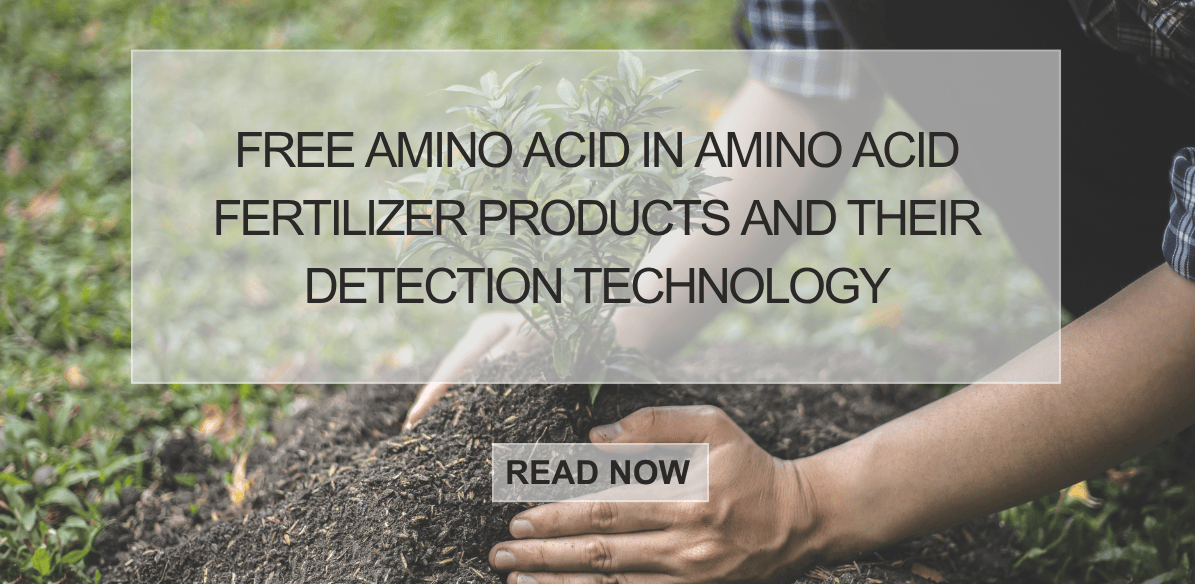
Free amino acid, as the basic building blocks of proteins, play a crucial role in plants. They are not only the direct raw materials for protein synthesis, but also participate in a variety of physiological metabolic processes in the plant, such as photosynthesis, respiration and antiretroviral reactions. Fertilizer containing free amino acid can significantly improve the utilization rate of fertilizers, promote the development of crop roots and enhance the nutrient absorption capacity of crops, thus improving crop yield and quality.
Innovation In Detection Technology: Precision And Efficiency Are The Key
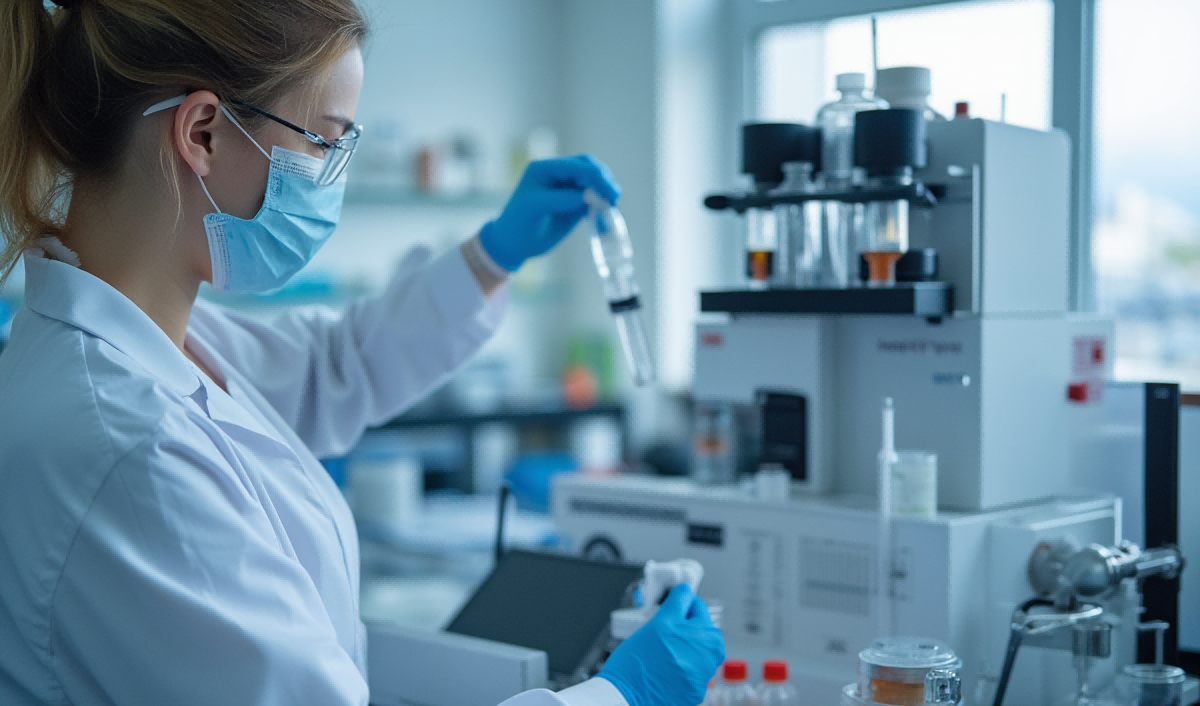
Traditional free amino acid detection methods rely on chemical or biological methods, which are cumbersome and time-consuming, making it difficult to meet the needs of modern agriculture for efficient and accurate detection. In recent years, with the progress of science and technology, a series of advanced detection technologies have emerged, such as high-performance liquid chromatography (HPLC), amino acid analyzers, etc. These technologies, with their high sensitivity, high resolution, and rapid analysis, have shown great advantages in the detection of free amino acids in fertilizers.
HPLC technology separates the free amino acids in the sample through the chromatographic column, and then combines with the UV detector or fluorescence detector for quantitative analysis, which can realize the simultaneous detection of a variety of amino acids, greatly improving the detection efficiency and accuracy.
Amino acid analyzer adopts the principle of ion exchange chromatography, combined with electrochemical detection or the ninhydrin color development method, which further simplifies the operation process and improves the detection accuracy. The ketone color development method further simplifies the operation process and improves the detection accuracy.
The Significance Of Free Amino Acid Testing In Fertilizers
Guiding the optimization of fertilizer formulations: through the detection of free amino acid content in fertilizers, fertilizer formulations can be scientifically adjusted to better meet the needs of crop growth and improve the utilization rate of fertilizers.
Ensure the safety of agricultural products: Reasonable control of the content of free amino acids in fertilizers can help reduce fertilizer residues and enhance the safety and nutritional value of agricultural products.
Promote the development of eco-agriculture: the popularization and application of free amino acid testing technology promotes the research and development and promotion of organic fertilizers and bio-fertilizers, which provides strong support for the development of eco-agriculture and sustainable agriculture.
Detection of free amino acids in fertilizers is an important manifestation of the progress of modern agricultural science and technology, which not only concerns the growth of crops and the quality of agricultural products, but also an important means to promote the green development of agriculture.
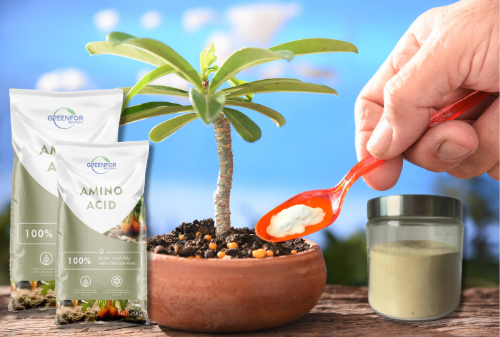
GREENFOR’s Amino Organic Fertilizer Powder 80%
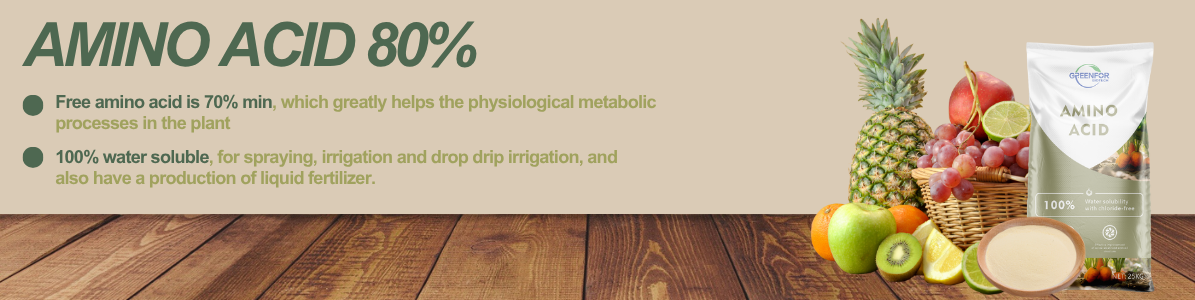
GREENFOR BIOTECH specializes in high-purity, plant-derived amino acid biostimulants that enhance crop performance naturally. Our products contain 70% min free amino acid, ensuring optimal molecular weight for maximum plant absorption and effectiveness.
1. Direct absorption and nutritional supplementation:
Amino acids are the smallest molecules that make up proteins. Plants can directly absorb these organic nitrogen components without going through a complex conversion process. This helps to quickly replenish the nutrients needed by plants and promote growth and development.
2. Promote photosynthesis:
Glycine and other components in amino acids can increase the content of plant chlorophyll and improve the efficiency of plants in absorbing and utilizing carbon dioxide, thereby enhancing photosynthesis and promoting the synthesis of organic matter.
3. Enhance metabolic function:
After amino acids enter the plant body, they can enhance the metabolic function of the plant, increase the activity of enzymes, promote respiration and material conversion, and accelerate the formation and accumulation of dry matter.
Click this link for more information: Amino Acid 80%
EDTA vs EDDHA: Choosing the Right Chelated Fertilizer for Healthy Crop Growth
Seaweed polysaccharides & oligosaccharides: unlocking seaweed's power for agricultural enhancement