
Behind the Green: Glyphosate, Parkinson's Risk, and the Role of Granular Humic in Safer Golf Course Turf

Glyphosate and Parkinson’s Disease Risk
Glyphosate, a widely used herbicide, is commonly applied in golf course turf management. Its residues can persist in soil and water, potentially leading to long-term, low-level exposure for nearby residents.
Humic Acid: A Natural and Safer Alternative for Golf Course Management
In contrast, humic acid offers a natural and safer alternative for golf course management. Granular humic acid improves soil structure, enhances aeration and drainage, and supports healthy root development across fairways, tees, and greens. By providing slow-release organic nutrients, it promotes denser turf and increases resistance to stress, disease, and wear, all while avoiding the environmental risks associated with synthetic herbicides.
Moreover, the use of humic acid can reduce reliance on chemical fertilizers and herbicides such as glyphosate. This not only minimizes chemical runoff and environmental contamination but also aligns with sustainable, efficient, and eco-friendly golf course management practices. Granular humic acid is easy to apply and releases nutrients gradually, preventing turf damage or over-fertilization, while supporting long-term soil health and microbial activity.
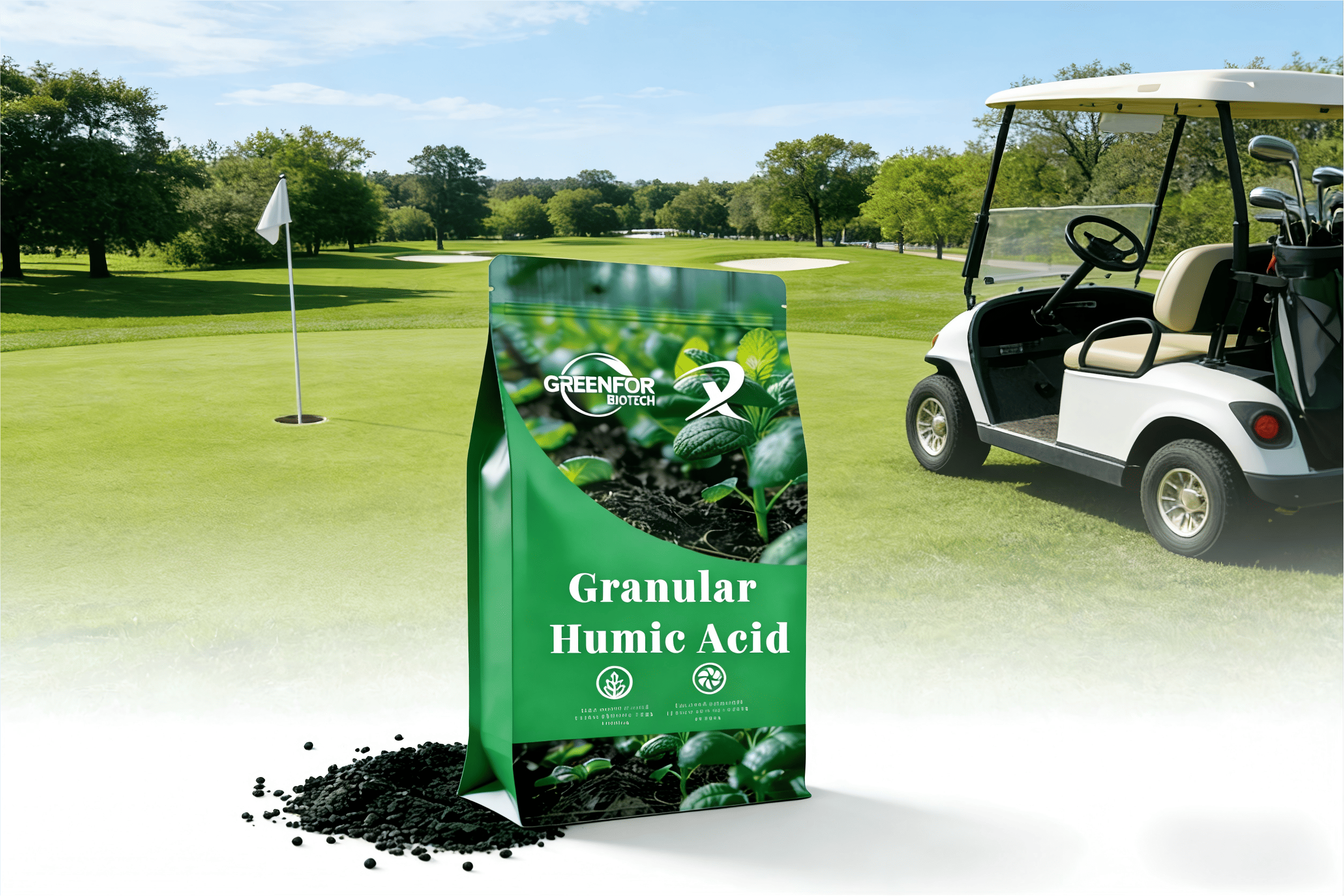
Why GREENFOR BIOTECH Granular Humic Is the Ideal Choice for Golf Turf?
* Water Insolubility
Unlike many synthetic fertilizers and herbicides that wash away with the first rainfall, granular humic is largely insoluble in water. This allows it to remain in the soil profile, where it can work continuously without leaching into the surrounding environments.
* Slow Reaction with Soil Alkalinity
Golf course soils are often alkaline. Humic granules react slowly with alkaline soil components, creating a controlled and sustained improvement in nutrient availability rather than a sudden growth surge.
* Long-Term Soil Health
By improving soil structure and nutrient efficiency, humic granules help reduce the overall need for aggressive chemical inputs, including glyphosate.
Boosting Nutrient Use Efficiency with Biostimulants
The Potassium (K) Cycle in Agriculture — The Role of Potassium Fertilizer in Plant Nutrition


