Why humic fertilizer is vital to your farming life: what is the difference and how to apply

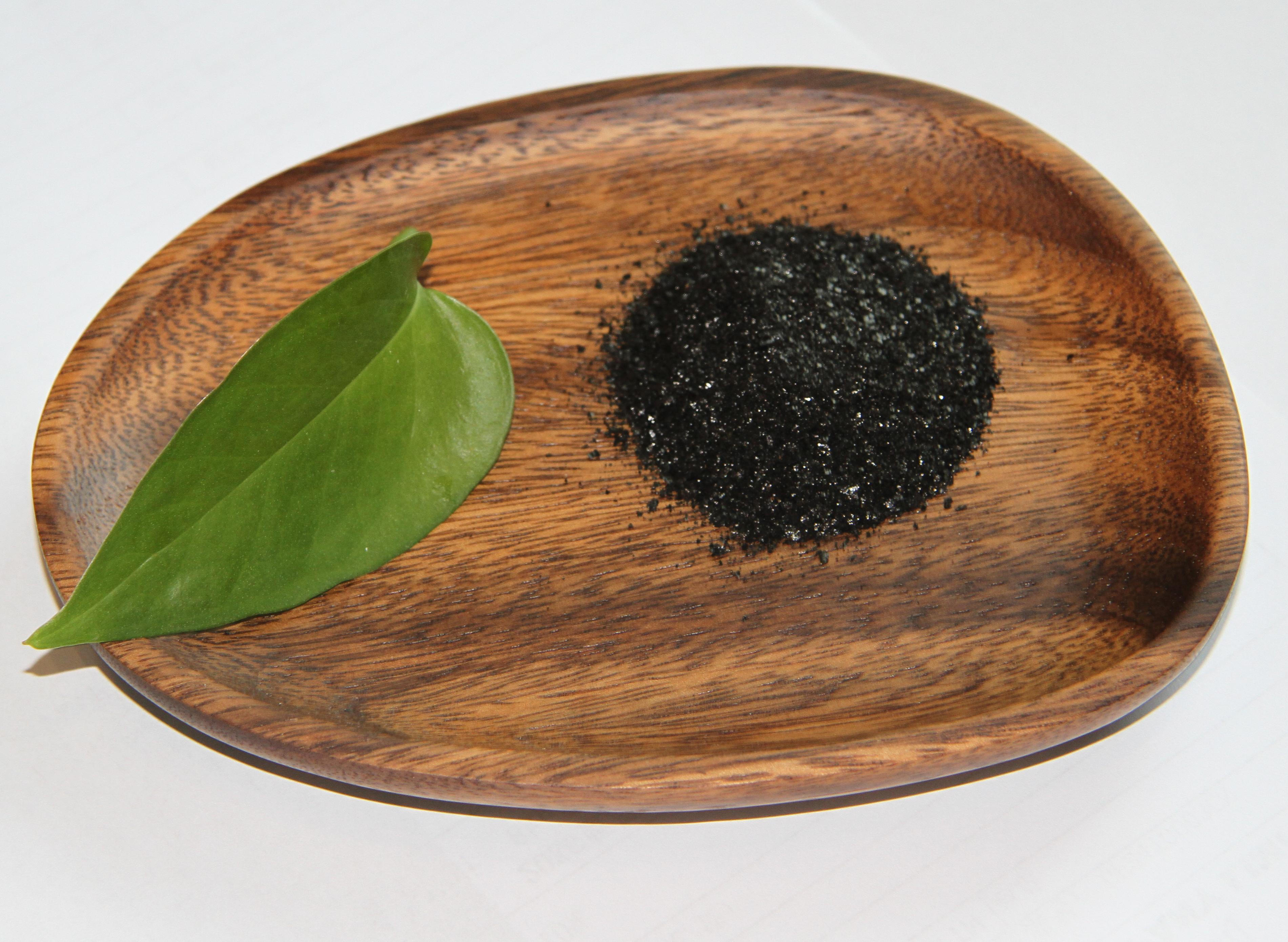
Natural humic acid is produced from simply crushed lignite or weathered coal, with a PH value of 4.0 to 6.0 and a humic acid content of 40% to 70%. It is fairly affordable and is mostly used as a granulation addition for compound fertilizers and as a soil improvement ingredient. Due to its potent chelating characteristics, natural humic acid can enhance the chemical composition of soil. Specifically, it can significantly boost the soil's capacity for cation exchange and prevent phosphorus from being fixed in the soil.
(1) Better fertilizer efficiency:
Humic fertilizer has the ability to bind soil particles together, boosting both water and fertilizer retention and thereby increasing fertilizer uptake. In addition to increasing fertilizer consumption rates on its own, Humic fertilizer can be combined with other organic fertilizer for plants to maximize results. As an illustration, consider the combination of nitrogen fertilizer and humic acid. Due to the presence of aromatic nuclei, hydroxyl, carboxyl, and other acidic substances in humic acid, these compounds can react more favorably with nitrogen fertilizer, ensuring that the crop fully absorbs the nitrogen element.
(2) More effective in promoting plant growth:
Humic fertilizer have the potential to enhance plant development by stimulating the plant's natural enzyme system. Potassium humate's carboxyl functional group has the ability to speed up enzyme processes, activate coenzymes, and boost biological activity. Humic acid fertilizer can boost photosynthesis and pigment synthesis, particularly increasing the amount of chlorophyll A in the pigment, as well as increasing the pace at which nutrients are absorbed by plant leaves.
Because humic acid has a significant chelating ability, it can effectively raise the exchange capacity of cations in soil and limit the fixation of phosphorus in soil, among other improvements to soil's chemical properties. Apart from its ability to buffer pH changes, Humic fertilizer can also enhance and control acidic and alkaline soil. The organic matter found in humic acid macromolecular matter serves as a haven and food for microorganisms, facilitating their reproduction and increasing activity, ultimately enhancing soil biology. Fertilizers containing humic acid are less harsh on the soil than other fertilizer for plants, which over time may cause the soil to crust and become salinized.

(1) Soak Seeds
If the concentration needs to be kept around 0.0005-0.005%, for example, humic acid fertilizer can be used to soak seeds. Soaking takes place usually in 5–10 minutes, but if the seed is a harder seed shell, it takes around 24 hours to soak. The utilisation of humic acid during seed soaking has the potential to enhance both the rate and viability of seed germination, as well as accelerate the process.
(2) Base Fertilizer
Humic fertilizer can be applied as base fertilizer; use 100–150 kg per acre. The humic acid fertilizer as a mixture with other fertilizer for plants must first be diluted with water to a liquid fertilizer with a concentration of 0.05–0.01%.
(3) Top Dressing
During the seedling and spiking stages of the crop, humic fertilizer can be applied as a top dressing fertilizer using approximately 250 liters of an aqueous solution with a 0.1% concentration per acre. It will greatly aid in the plant's growth if you just water it close to the roots.
(4) Mixed With Other Fertilizer For Plants
① Direct Mixing
By the production schedule, humic fertilizer and other fertilizer for plants are thoroughly combined in the batching silo. They are then conveyed by belt into the pelletizing disc or drum for mixing and pelletizing, after which they are dried, cooled, and screened to create fresh fertilizer.
② Trench Or Hole Application Method
A trench or hole application method can be used to apply a combination of fertilizers to a tree. The canopy projection edge is the location where fertilizer is applied. First, a trench is dug, into which other fertilizer for plants are poured, and then humic acid fertilizers are mixed in. Because the tree's crown is below the root system's distribution, which is very dense, the fertilizer's edge in the crown of the tree not only won't harm the root system but also promotes fertilizer absorption. Fertilizer cannot be buried too shallowly since this prevents the root system from absorbing it. Instead, dig two rings around the tree crown and tree age, with a depth of 20 to 40 cm. Water thoroughly after burying fertilizer to help trees absorb it.
Transforming crop nutrition: why amino acid fertilizer is the key to healthier plants, higher yields, and stronger soil
Enhancing soil health: humic acid organic fertilizer and biostimulants in agriculture