Sodium Humate Fertilizer 70%
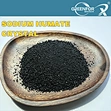
Biological Fertilizer refers to substances containing living microorganisms that, when applied to soil, enhance nutrient availability and promote plant growth. Sodium Humate appears as a black flake, particle, or powder form, obtained through the extraction of weathered coal using sodium hydroxide solution. This compound is easily soluble in water, alkaline, non-toxic, odorless, and non-corrosive. It exhibits various functions such as ion exchange, adsorption, complexation, flocculation, dispersion, and bonding.
Biological fertilizer harnesses the power of living microorganisms to enhance soil fertility and promote plant growth. This compound exhibits alkaline properties and is characterized by its non-toxic, odorless, and non-corrosive nature, which enhances its safety and usability. Functionally, biological fertilizer contributes to soil improvement and environmental remediation by fostering beneficial microbial activity.

| ITEM | SODIUM HUMATE | ||
| Humic Acid (dry basis) | 70% min | 65% min | 60% min |
| PH Value | 9-11 | 9-11 | 9-11 |
| Appearance | Flake/Powder/Crystal/Granular | ||

In terms of its advantages for the animal,
1. Sodium Humate fertilizer can effectively facilitate ion exchange and catalysis, and encourage the absorption of feed components because of its colloid properties and adsorption capacity.
2. Sodium Humate fertilizer is anti-inflammatory and aids in the recovery of wounds.
3. Biological Fertilizer, enriched with beneficial microorganisms, enhances metabolism and accelerates animal growth.
4. Biological fertilizer and nutrient availability indirectly contribute to improving the quality of meat and increasing the production of milk, eggs, and meat.
5. Sodium Humate fertilizer makes animal capillaries more vibrant.
6. Biological fertilizer, through its cultivation of beneficial microorganisms, bolsters resistance to illness and quickens animals' development.
7. Sodium Humate also serves as a synergistic additive in aquaculture systems.
-
In terms of its advantages for industry,
1. Wastewater Treatment: Sodium Humate enhances flocculation by binding suspended particles and contaminants, improving water purification efficiency.
2. Remediation of Contaminated Sites: Industries involved in environmental remediation benefit from sodium humate's ability to bind with heavy metals and organic pollutants in contaminated soils. It helps immobilize these contaminants, reducing their mobility and potential for leaching into groundwater, thereby facilitating soil cleanup efforts.
3. Drilling Fluids: Sodium humate is used in the oil and gas industry as an additive in drilling fluids. It helps stabilize the viscosity of drilling muds, improve lubricity, and control fluid loss. These properties contribute to efficient drilling operations by enhancing wellbore stability and reducing operational risks.
4. Industrial Applications: Beyond specific industries mentioned above, sodium humate finds applications in various industrial processes where its properties as a dispersant, binder, or complexing agent are advantageous.
-