
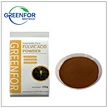
Potassium Fulvic Acid 50%
Potassium fulvic acid contains bio-potassium fulvic acid and mineral potassium fulvate. It is derived from fulvic acid, a natural organic substance found in soil, sediment, and water. Fulvic acid is a complex mixture of organic acids and other compounds formed during the decomposition of organic matter by microorganisms.
Potassium fulvic acid is fulvic acid complexed with potassium ions, making it water-soluble for easy application as a fertilizer or soil amendment. This agricultural supplement is commonly used to boost plant growth and enhance soil health.

ITEM | BROWN POWDER |
Fulvic Acid (dry basis) | 50% min |
K2O | 10-15% |
Moisture | 10% max |
PH Value | 4-6 |

In terms of its advantages for plants,
1. Among the most important potassium fulvate uses is its ability to stimulate metabolic pathways within plants. The biologically active compounds present in potassium fulvic acid increase photosynthesis, accelerate enzyme activity, and enhance sugar transport.
2. Potassium fulvic acid significantly enhances nutrient solubility and mobility in the soil. This improves the absorption of potassium, nitrogen, phosphorus, and micronutrients. As a result, plants experience faster development and stronger vitality.
3. One of the key potassium fulvate uses in gardening and agriculture is promoting robust root architecture. This leads to improved drought resistance, higher nutrient uptake efficiency, and greater plant stability.
4.Through improved nutrient availability and enhanced metabolic activity, potassium fulvate uses include increasing yields while improving fruit color, taste, aroma, and nutritional value.
5. Using potassium fulvic acid reduces dependence on synthetic fertilizers, lowers environmental impact, and supports long-term soil health, all major goals in modern sustainable farming.
-
In terms of its advantages for soils,
2. It chelates essential nutrients, making them more available for plant uptake. This enhances the efficiency of fertilizers and reduces nutrient leaching, thereby improving nutrient retention in the soil.
3.By boosting CEC, potassium fulvic acid increases the soil’s ability to hold essential nutrients, especially potassium, calcium, and magnesium, making them available for extended periods.
4.Microbial populations thrive in soils treated with potassium fulvic acid. This is one of the major potassium fulvate uses, as microorganisms contribute to nutrient cycling, organic matter decomposition, and disease suppression.

25kg bags.


